
Searching for the best patio heater to keep your outdoor gatherings going on those chilly evenings? Don’t let a sudden cold snap send everyone running inside. We’ve tested the top models to help you transform your backyard into a wonderfully warm and cozy oasis. This guide makes it simple to find the perfect outdoor heater for your space and budget, ensuring your get-togethers are unforgettable.
Contents
- Top 5 Patio Heater:
- 1. East Oak UR50BN2 – Best Patio Heater Overall
- 2. Pamapic Flame – Best Pyramid-Style Patio Heater
- 3. Briza Infrared Patio Heater – Best Electric Patio Heater with Stand & Remote
- 4. Dr Infrared Heater DR-238 – Best Electric Wall-Mounted Patio Heater
- 5. Amazon Basics Propane Heater – Best Budget Patio Heater
- Things to Consider Before Buying a Patio Heater:
- Important Factors to Consider
- Size and Space Requirements
- Heat Output and Coverage
- Safety Features
- Advantages of Propane Heaters
- Disadvantages of Electric Heaters
- Assessing Your Needs
- Researching Options
- Comparing Brands and Models
- Regular Cleaning
- Seasonal Storage
- Conclusion
Top 5 Patio Heater:
1. East Oak UR50BN2 – Best Patio Heater Overall

If you’re in the market for a patio heater that will keep your guests warm, and your setup looking good; it can be hard to find one better than the EAST OAK UR50BN2. You’ll enjoy up to 50,000 BTUs of soothing radiant heat for areas up to a 20-ft diameter making it the perfect place to spend time with friends or in solitude even as winter goes along. It’s gas-powered and designed for use outdoors or light commercial use on balconies, in gardens and on patios.
Where it matters, you’ll feel the quality. Wear resistant double layer 304 stainless steel upward and conical burner mesh covering enhanced stability. The tank base can be weighted for those windy nights. It has built-in wheels that make it easy to roll into position or put away when the weather changes.
Control is straightforward. Adjust the heat to fit the occasion — a soft warm up, an invigorating blast — until every one of us finds his or her sweet spot. The rounded table-tank lid can be used as an additional platform; the perfect place for snacks, drinks or your mobile at party hour and when not in use will sit neatly over the burner keeping everything covered up and safe.
Safety comes standard. The heater also features a robust dual-protection system featuring overheat protection and a thermal safeguard for added peace of mind and a smart, intelligent design that makes the heater extremely quiet in operation.
If you seek the Best Patio Heater Overall — forceful heat, intelligent stability, easy movability and a handy tabletop surface—then scanning the market is likely to turn up nothing more versatile than EAST OAK UR50BN2: It makes your outdoor time prime-time every night.
2. Pamapic Flame – Best Pyramid-Style Patio Heater
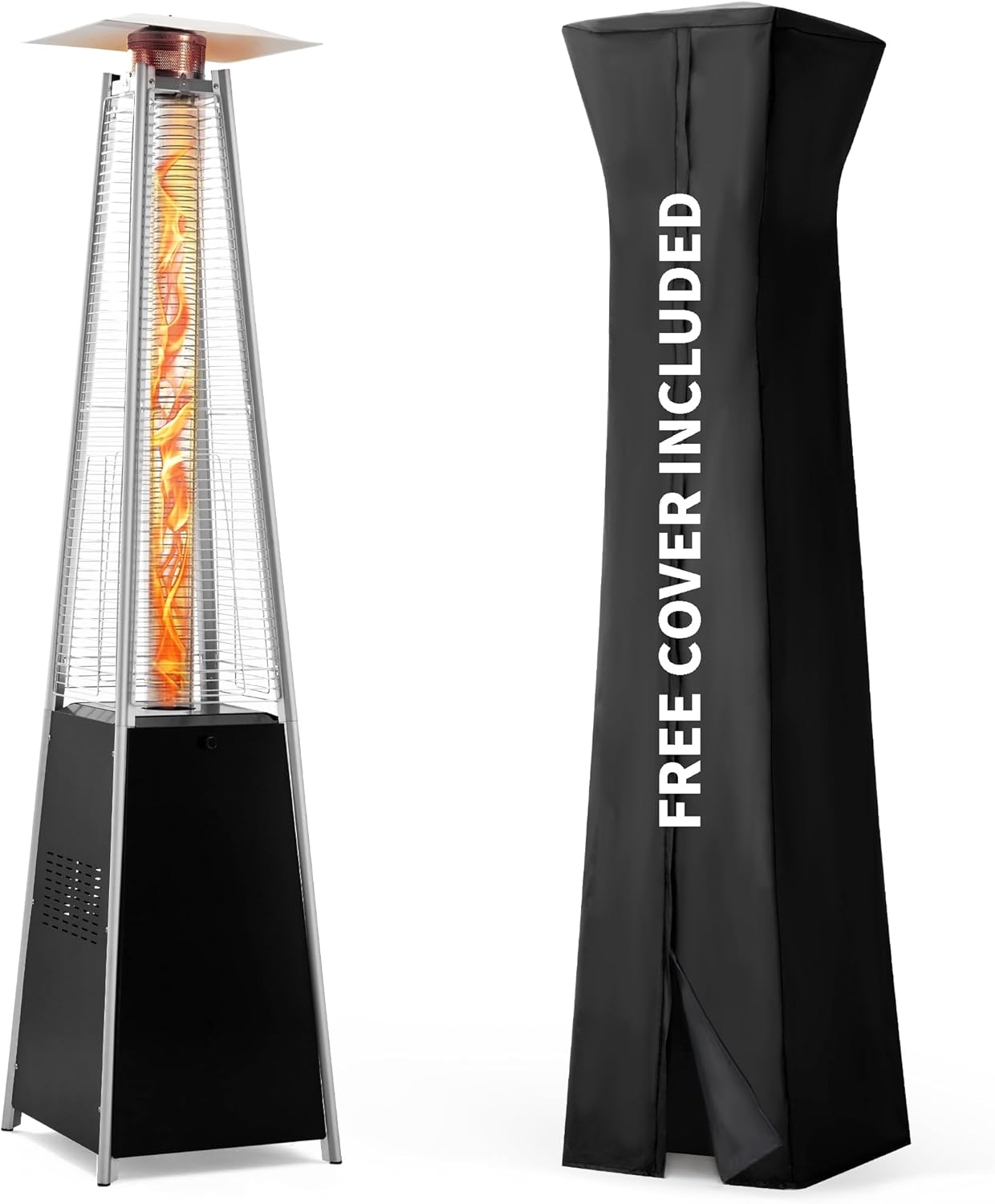
If you are looking for a showpiece heater that pumps out some real warmth alongside, the Pamapic Flame pyramid style patio heater is a contender. This one towers at 89.4 inches, and features a captivating glass flame tube that will breathe life into your party and keep guests captivated as they watch the flame dance all the way up to top–all 48,000 radiant BTU worth of it.
You’ll appreciate the straightforward operation. A dependable pulse ignition system will swiftly ignite the flame, while a variable control knob featuring its own control valve will allow you to adjust temperature as the external conditions may warrant. When it is time to refuel, a drawer design of the door makes swapping existing 20 lb propane tanks (not included) easy with minimal hassle.
Designed for outdoor use, the heater comes in a stunning black finish and features stainless steel accents and an overheat protection system for safety. It’s a sturdy tower once it’s in place — at 61.7 pounds, the thing has some heft to it. Know that on extremely windy days it will not be as effective, and in those cases you may want to move the unit to a less windy spot or near house where winds are decreased.
Day to day, it’s as functional as it is eye-popping: simple starts, adjustable output and a flame display that creates the mood with no need for additional décor. If you’re in the market for the Best Pyramid-Style Patio Heater—stylish looks, dependable heat, easy tank access—the Pamapic Flame lets you enjoy patio season on your own terms.
3. Briza Infrared Patio Heater – Best Electric Patio Heater with Stand & Remote
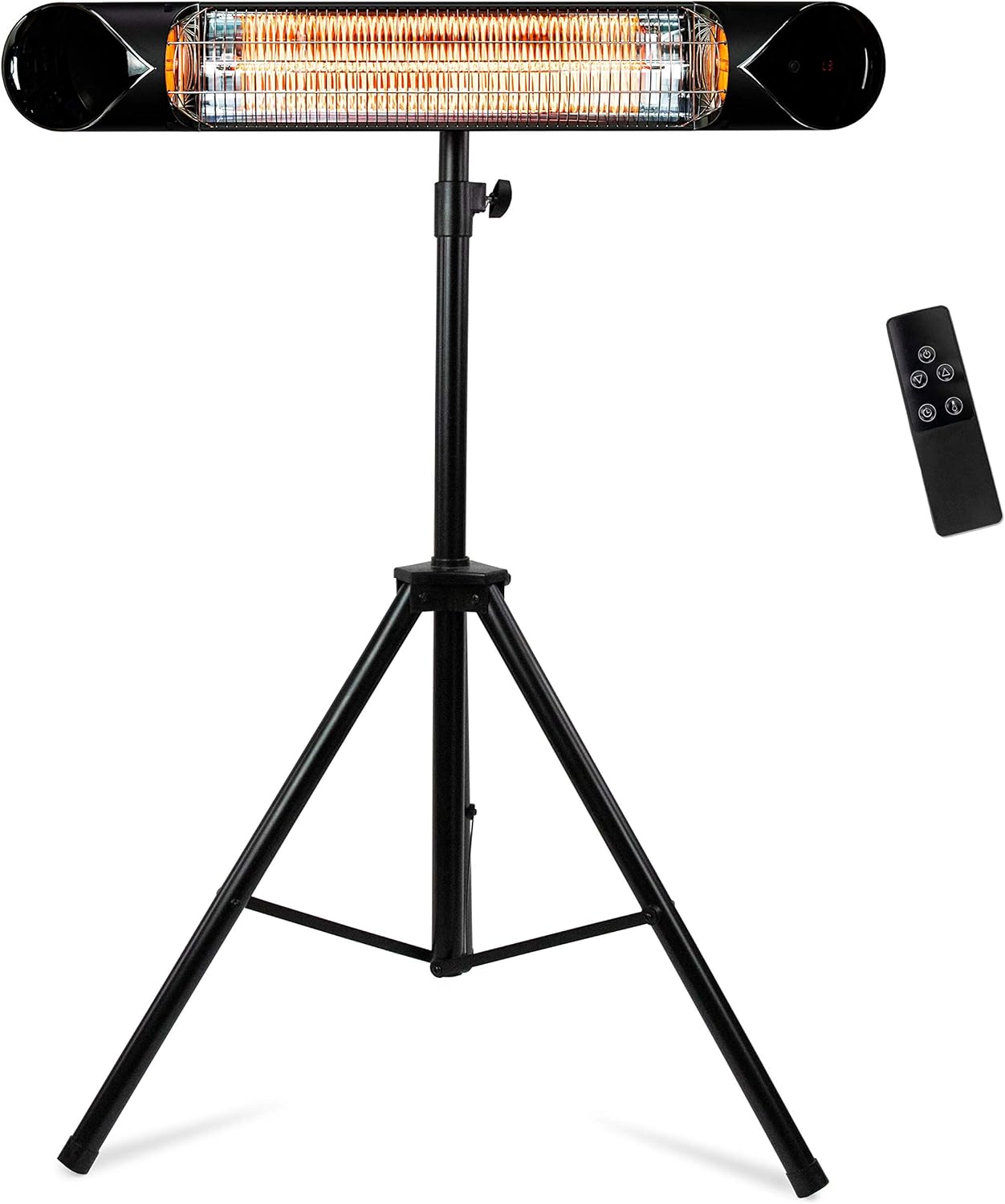
The Briza Infrared Patio Heater is a smart, plug-in solution if you want fast, targeted warmth with an adaptable setup. You can use the included adjustable tripod for stand-alone heating or you can mount it to a wall or ceiling with the hardware we have already included in the box – perfect for an open patio, garage, workshop, or any other unheated room. Carbon infrared elements provide sun-like heat that warms people and objects directly, so you feel comfortable the same way sitting in the sun feels.
You’re at the wheel from your seat. Power on/off, set the timer, and select a desired heat level using other buttons on the remote that allow for more advanced operation; including changing the digits on the display to fahrenheit or celsius。Switch through three different heat setting without leaving your seat! At about 3 kg, it’s light enough to be miles better than nothing, and the tower form factor keeps things out of the way around furniture and walkways.
It has safety and durability baked in. An auto-off tip-over sensor turns the unit off if it gets knocked over, and an IP55 weather-resistance rating means that the device can withstand rain, snow, dust and windblown grit when used outside. As it’s corded electric, there is no open flame, no emissions and very little warm-up time (that means you’ll be feeling toasty warm from the get-go when you turn on your new infrared garage heater).
If you’re in the market for the Best Electric Patio Heater with a stand and remote— portable, easy to mount and control then the Briza will offer utter comfort anywhere that you plug it in.
4. Dr Infrared Heater DR-238 – Best Electric Wall-Mounted Patio Heater

If all you need is clean, instant heat that doesn’t depend on gas or flames, it’s a smart wall-mount upgrade to the Dr Infrared Heater DR-238. You have indoor/outdoor flexibility in a product with an IP55 rating, meaning it’s just as comfortable on a patio, deck or in a garage as it is in your workshop or sunroom.
You control comfort precisely. You can select from three power levels; 900W, 1200W or 1500W and tailor the heater to an early morning chill or that of a cold evening, now bask in odor less infrared warmth that wafts toward people and massive surface areas. While a high-efficiency mirror aluminum reflector concentrates the output of the carbon infrared lamp to where you want it, so that heat feels direct and even.
Installation is straightforward. Wall and ceiling mounting brackets are included, along with an 8 lb. lightweight cabinet to make installation easier than bulky gas models. After installation, operation comes down to set-and-forget: plug in, turn on and you can adjust the heat from across the room with the remote.
On an everyday level, it is practical and low-maintenance. There’s no tank to trade in, no pilot to relight and no emissions — just quiet radiant warmth for home patios, open-air dining or indoor utility spaces.
If you’re looking for a no fuss electric wall mounted heater that’s easy to install and operate, year-round comfort from an electric wall-mounted heater that simply works when all you want to do is plug-and-go (with an optional remote control), then the DR-238 heater is your answer!
5. Amazon Basics Propane Heater – Best Budget Patio Heater
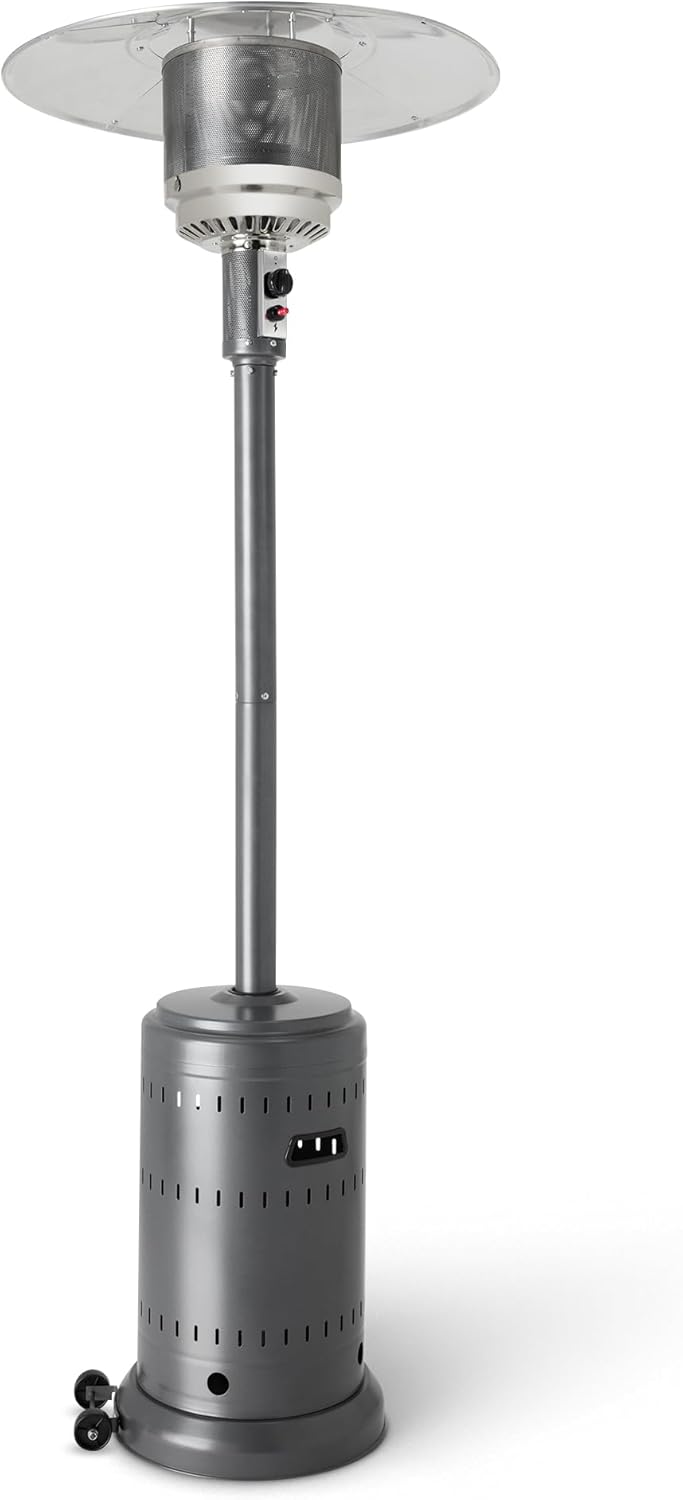
The Amazon Basics Patio Heater is a simple choice if you’re looking for an reliable and inexpensive source of outdoor warmth. Somehow, it maes the slim slate-gray tower look tidy on decks, balconies, cafés and backyard lounging spots (the unit emits nearly 46,000 BTU of radiant heat) which is about enough to extend a cosy ~9-foot warming radius round dinners out of doors or game nights with coffee served in cups.
You’ll be back on the road in no time. The one-touch ignition fires up the burner fast and an adjustable knob helps you control output as the night cools. Whether it comes time to rearrange the room or put the heater away, built-in wheels make moving this one an easy job.
Safety and stability are already built in. A tilt safety auto-shutoff valve cuts the heater off if tipped over and a water box at the base adds ballast for improved wind resistance. A chain makes sure the propane tank stays put while you’re mingling and relaxing.
Practically, it’s efficient and space-saving day to day. Propane powered heating allows you to enjoy your patio all year long, with additional coverage for seating areas via a radiant heat source without the need to wait for your outdoor fireplace to make you comfortable. At about 16.78 board, it’s sturdy but also easy to move and locate where you need it.
If the Best Budget Patio Heater is what you’re seeking, easy to ignite, convenient to move, and safe in use; then this Amazon Basics model is the best bet for ensuring your outdoor area stays warm and welcoming all year round.
Things to Consider Before Buying a Patio Heater:
Buying a patio heater requires you to weigh fuel type (propane, natural gas, electric), heat output and area coverage, installation and mounting options, safety features such as tip-over and automatic shutoff, ongoing operating costs, and weather resistance for longevity; you should also assess portability versus permanent placement and local regulations to ensure your choice fits your space, budget, and usage patterns.
Important Factors to Consider
You should weigh fuel type, heat output, coverage, placement, portability, and safety when evaluating patio heaters; for example, a 40,000–48,000 BTU propane tower heats differently than a 1,500–3,000W electric wall unit, and an infrared lamp warms people directly while convection units raise ambient air. Recognizing how wind, layout, and your typical group size change required output will guide the right choice.
Size and Space Requirements
You should measure usable patio area and ceiling height before choosing a heater; freestanding patio towers typically stand 7–8.5 ft tall with a 20–24 in base, while umbrella or ceiling-mounted units fit under 6–9 ft structures. Allow commonly recommended clearances of 24–36 in from walls/combustibles and a 3–6 ft effective comfort zone per heater, matching unit footprint to traffic flow and furniture layout.
Heat Output and Coverage
You’ll compare BTU and watt figures to match area needs: tabletop heaters often produce 3,000–5,000 BTU, standard propane towers 40,000–48,000 BTU, and electric units 1,500–3,000W. Expect effective warmth to cover roughly a 6–12 ft radius depending on wind and mounting; choose higher output for open, exposed patios and infrared models when you need targeted, immediate warmth.
To translate numbers into coverage, use a practical rule: a 40,000–48,000 BTU propane heater commonly warms about 100–150 sq ft in mild conditions, while a 1,500W electric panel is best for 50–80 sq ft. You should factor wind: a 5–10 mph breeze can cut felt warmth dramatically, so compensate with reflectors, multiple lower-output units positioned near seating, or infrared arrays that deliver radiant heat directly to people rather than relying on warming the air.
Safety Features
You should prioritize models with tip-over cutoffs, flame-failure or gas-flow shutoff valves, certified construction (ETL/CSA/CE), and weather resistance (look for IPX4 or better for splashes). Controls that lock, cool-touch handles, and stable weighted bases significantly reduce incident risk, and clear manufacturer-specified minimum clearances will protect your furniture and overhead structures.
Inspect safety specifics closely: many gas heaters include a thermocouple that shuts fuel within seconds if the flame goes out and anti-tilt sensors that interrupt flow on sudden movement. You should follow installation limits—manufacturers commonly require 24–36 inches from combustibles and 6–8 ft minimum mounting height for ceiling units—perform hose and connection checks before each season, and use GFCI-protected circuits for electric heaters to prevent electrical hazards.
Advantages of Propane Heaters
You get rapid, high-output warmth with a common 40,000–48,000 BTU propane tower that comfortably serves 150–300 sq ft; a 20-lb tank typically runs about 8–11 hours on medium, so one tank often covers an evening. Portability lets you move heat to concrete patios, decks, or tents without rewiring, and maintenance is mostly periodic burner cleaning and tank swaps, making them reliable for frequent outdoor entertaining.
Disadvantages of Electric Heaters
Electric units usually deliver around 1,500W (≈5,100 BTU/hr), so you’ll need multiple heaters to warm larger areas and they’re best for 50–150 sq ft per unit. You must place them near a 120V outdoor outlet or use outdoor-rated wiring and GFCI protection, and they stop working during outages. In windy or fully open spaces their convection-based heat dissipates quickly compared with radiant or high-BTU gas units.
Assessing Your Needs
Measure your outdoor area in square feet and note wind exposure; a 10×12 ft (120 sq ft) covered porch typically needs about 20,000–30,000 BTU or a 1500–3000W infrared to feel comfortable. If you host larger groups, choose 360° standing heaters rated 40,000–48,000 BTU. Also consider mounting: wall or ceiling heaters save floor space but require electrical access, while portable propane suits occasional, off‑grid use.
Researching Options
Start by matching fuel and heat output to your space: propane models commonly deliver ~40,000 BTU and heat roughly 150–200 sq ft, while electric infrared units run 1,500–3,000 W and suit smaller patios. You should note mounting style—freestanding, wall, or tabletop—plus weather rating (IP or outdoor-rated), average run-time for fuel, and whether you need a hard‑wired gas line or portable tank.
Comparing Brands and Models
Focus on measurable differences: warranty length, stainless steel vs painted finishes, reflector size, and safety systems like tip‑over and auto shutoff. Read at least 50 customer reviews per model when possible, watch for recurring complaints about corrosion or weak burners, and compare real-world heat coverage rather than just peak BTU or watt numbers.
Regular Cleaning
Wipe the exterior and reflector regularly—every 2–4 weeks during heavy use—and perform a deep clean twice a year. Always turn off and cool the unit, then disconnect the gas cylinder or unplug power before you start. Use a soft cloth, mild detergent, and a soft brush to clear burner ports and spider webs; compressed air works well for orifices. Inspect your hoses and regulators for cracks and test valves with a soapy-water leak check; replace damaged parts promptly.
Seasonal Storage
Before storing for winter, clean and dry the heater thoroughly, then disconnect the propane cylinder and store it outdoors upright in a ventilated area per safety guidelines. Cover the heater with a breathable, weatherproof cover and, if possible, move it into a garage or shed to avoid freeze‑thaw damage. Coil your power cord neatly and remove batteries or ignition modules. Label parts and take photos for quicker reassembly next season.
Inspect your seals, hoses and burner ports before and after storage; replace O-rings every 2–3 years and treat any surface rust with a rust converter or 120‑grit sanding followed by touch-up paint. If you have an electric model, store it indoors and keep the emitter face free of dust; if you use propane, run the heater briefly after storage to verify a steady blue flame and perform a soapy-water leak test on connections. Log service dates and parts you replaced for warranty proof.
Conclusion
Drawing together, you should weigh heating type, coverage area, fuel availability, installation and safety features, ongoing operating costs, and warranty to match your outdoor space and climate. By prioritizing efficiency, placement, and maintenance needs, you can select a patio heater that delivers reliable warmth, safety, and value for your lifestyle.
Leave a Reply