
Finding the best running shoes shouldn’t feel like an impossible marathon. Are painful blisters and aching feet ruining your morning jog? You deserve confident strides and total comfort every time you lace up. We tested top-rated cushioning and support features to help you crush your personal goals safely. Stop settling for sore feet and start loving your run again with these expert selections.
Contents
- Top 5 Running Shoes:
- 1. HOKA Clifton 9 – Best Running Shoe Overall
- 2. Brooks Ghost 15 – Best Running Shoe for a Smooth Ride
- 3. Brooks Adrenaline GTS 24 – Best Stability Running Shoe
- 4. New Balance Fresh Foam 680 v7 – Best Fresh Foam Cushioning Running Shoe
- 5. Saucony Cohesion 15 – Best Budget Running Shoe
- Things to Consider Before Buying a Running Shoe:
- Road Running Shoes
- Trail Running Shoes
- Stability Shoes
- Cushioning Shoes
- Foot Type
- Running Style
- Surface Type
- Fit and Comfort
- Trying Before Buying
- Your Running Goals
- Advantages and Disadvantages
- Considerations for Your Running Needs
- Conclusion
Top 5 Running Shoes:
1. HOKA Clifton 9 – Best Running Shoe Overall

If you’re looking for a trustworthy sneaker that combines plush padding with all-day durability, go no further than the HOKA Clifton 9. The top is made of lightweight, breathable material, which is easy on the feet even after lengthy workouts. The inside is smooth, which helps to minimize rubbing as you rack up miles. The rubber outsole provides extra grip on both roads and tracks, while the polyurethane midsole is fine-tuned to absorb shock and maintain a constant stride feel throughout your run.
You’ll be impressed by how easy it is to set up. The imported construction prioritizes comfort and functionality, and the materials list is simple: textile and polyurethane. There is no fur component. You can go from leisurely runs to steady tempos with ease thanks to the ankle-height cut’s secure fit around the collar and lack of constrictive overlays. The Clifton 9 is designed to keep legs feeling fresh, whether you’re just starting to run again or you’re still putting in your weekly base miles. It achieves this by combining comfortable cushioning with a stable platform that doesn’t feel too heavy.
The standout features are the adaptability and fit. Put them on for days when you need to recover, for your daily foot commute, or for longer weekend runs when you need a shoe that maintains its shape even when you’re tired. Training becomes easier and more repetitive day after day with the HOKA Clifton 9, which has a breathable top, a dependable grip, and a gentle ride, making them ideal for most runs.
2. Brooks Ghost 15 – Best Running Shoe for a Smooth Ride

The Brooks Ghost 15 is an excellent choice if you’re looking for a secure, comfy, and smooth trainer to wear every day. You can concentrate on your rhythm rather than hot spots or fumbling with the laces thanks to the upper’s enhanced 3D Fit Print technology, which conforms to your foot for a snug fit without harsh overlays. The neutral base is great for runners of all speeds and types of workouts, making them a versatile shoe option for everything from long runs on the road to cross-training and gym sessions.
Cushioned landings without the mushy sensation are now possible thanks to the improved DNA LOFT v2 midsole, which is softer and lighter than before. The Segmented Crash Pad integrates shock absorbers to ease the transition from heel strike to toe-off, allowing each step to roll naturally. A steady, predictable ride is the end result, allowing you to maintain your energy for longer workouts and recovery runs.
When the going becomes tough or the temperature rises, the designed air mesh top will keep the airflow moving for optimal breathability. You won’t have to worry about your feet feeling constricted or cradled because the overall fit strikes a good mix between the two.The Ghost 15 is an assured choice if you’re in the market for a neutral shoe that combines supple padding with a sleek, multi-tasking ride.
3. Brooks Adrenaline GTS 24 – Best Stability Running Shoe

Designed to keep you balanced and comfortable as the miles pile up, the Brooks Adrenaline GTS 24 offers solid stability with a luxurious, modern feel. Without feeling stiff or over-corrected, you may maintain an aligned stride with the help of GuideRails® holistic support, which gently restricts excess movement. Everyday runs and extended efforts are consistently cushioned by the DNA Loft v3 midsole, which is injected with nitrogen and provides soft, lightweight support that adapts to every step.
How well it adapts to your movements is something you’ll really like. Reduced weariness on consecutive training days is possible because to an improved midsole-outsole construction that allows for more natural transitions from landing to toe-off. The designed air mesh top strikes a good mix between breathability, stretch, and structure, providing a snug fit where it’s needed and loose fit where it’s not.
An all-synthetic top for easy maintenance, a sturdy rubber outsole for surefooted road traction, and an imported construction that can withstand regular mileage are all practical aspects that complete the package. If you’re dealing with mild to moderate overpronation or just want some extra support when the going gets tough, this shoe is for you.
The Adrenaline GTS 24 is a great choice if you’re looking for a shoe with natural-feeling stability, energetic cushioning, and smooth transitions that will keep your rhythm intact for miles on end.
4. New Balance Fresh Foam 680 v7 – Best Fresh Foam Cushioning Running Shoe

The New Balance Fresh Foam 680 v7 provides dependable cushioning for everyday treks, walks, and gym workouts without adding unnecessary weight. The Fresh Foam midsole is dual-density and has been fine-tuned to provide a cushioned underfoot experience while yet providing enough responsiveness to maintain a natural stride. A lightweight, cushioned foundation that lessens impact and maintains foot freshness over longer distances is the end result.
On hotter days and during longer workouts, you’ll be grateful for the upper’s breathability. Engineered mesh reduces friction and hotspots through air circulation, and a no-sew design makes for a smooth inside. every foot will feel balanced throughout every stride, from landing to toe-off, thanks to a molded insert that provides additional support and stability inside the shoe.
With the full rubber outsole’s traction and durability, you can confidently tackle mixed routines on roads, tracks, and treadmill belts. Imported construction prioritizes durable materials that withstand frequent training, and the traditional lace-up clasp allows for a personalized fit in the midfoot and forefoot.
A simple, inexpensive option is the Fresh Foam 680 v7 cushioned neutral trainer, which strikes a good mix of all-day comfort, breathability, and durability. Put on your shoes, find your groove, and let the shoe absorb impact as you concentrate on logging steady, pain-free kilometers.
5. Saucony Cohesion 15 – Best Budget Running Shoe
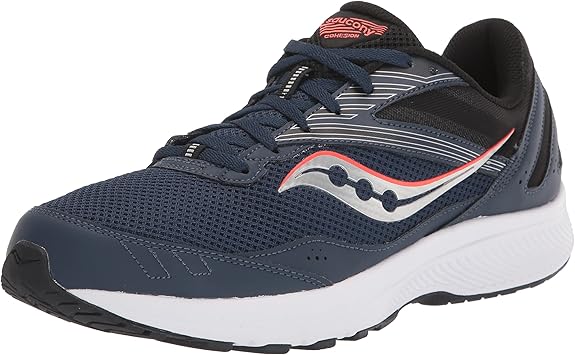
The Saucony Cohesion 15 are great all-around running shoes that won’t break the bank but will provide enough of cushioning and support. Every day jogs, long walks, or treadmill time will be easier on your feet and joints thanks to the VERSARUN cushioning, which absorbs impact and decreases strain. You may relax into your speed and concentrate on gaining momentum rather than coping with discomfort because the ride is constant and smooth.
The long-lasting quality and reliable traction would be much appreciated. The durable rubber outsole provides a secure and assured ride on pavement, tracks, and gym floors, mimicking Saucony’s most trusted road patterns. The upper is crafted for optimal support and comfort, while the whole construction is made with simple, durable materials that prioritize durability and provide all-day wearability.
The Cohesion 15 is very versatile. It’s a decent companion for a variety of exercises, whether you’re doing short runs during the week, longer walks on the weekends, or cross-training on days off. The padding reduces the impact of exercises, allowing you to start a new program or return to an old one with less soreness and more intensity.
When you’re looking for a pair of trainers that won’t break the bank but will yet provide all the essentials for everyday training—cushioned comfort, a durable rubber outsole, and an easy fit—go no further than the Saucony Cohesion 15.
Things to Consider Before Buying a Running Shoe:
Just focus on fit and function: make sure you choose a shoe that matches your gait and arch type, provides appropriate cushioning and stability for your mileage and terrain, and offers a comfortable toe box and secure heel hold; try shoes later in the day and run briefly to verify fit, check heel-to-toe drop and weight for your training goals, and plan to replace shoes based on wear and loss of responsiveness to avoid injury.
Road Running Shoes
You’ll want road shoes that weigh about 170-280 g (6-10 oz), offer responsive midsole foam and breathable uppers; typical heel-to-toe drops run 6-12 mm, which helps with smooth heel-strike-to-toe-off transitions on pavement.
Trail Running Shoes
You should choose trail shoes with lug depths around 3-6 mm, a firmer midsole and protective rock plates when you tackle technical terrain; many trail models add water-resistant uppers and reinforced toe caps for durability.
You can prioritize models with sticky rubber and gaiter-compatible collars for wet, rocky routes; for long ultramarathons select shoes with more cushioning and lighter weight if you run 40+ miles per week, while technical-brief options suit steep, short runs.
Stability Shoes
You’ll find stability shoes use medial posts, dual-density foam or geometry that guides the foot to reduce excessive inward roll; they’re best if gait analysis shows moderate overpronation and you log consistent weekly mileage.
You should expect stability features to add a bit of weight but lower injury risk for many runners; try a 6-8 mm drop stability shoe on a 10-20 mile per week plan and reassess comfort and knee/hip alignment after 50-100 miles.
Cushioning Shoes
You can opt for cushioning/maximal shoes with stack heights commonly between 30-40 mm to soften impact on long runs and recovery days; these shoes often trade some responsiveness for prolonged comfort over high-mileage weeks.
You should consider cushion shoes when you regularly run 30+ miles weekly or have a history of impact-related soreness; test models with different foam densities-some modern foams (PEBAX/TPU blends) deliver softer landings without a large weight penalty.
Foot Type
Your arch and pronation dictate stability needs: about 50-60% of runners have neutral arches and do well with supportive-cushion shoes, low-arched/overpronators often benefit from stability or motion-control designs with firmer medial posts, and high-arched/supinators need flexible, well-cushioned shoes to absorb impact. Analyze wear patterns on old shoes or get a gait scan to match support to your biomechanics.
Running Style
If you mainly run intervals or race, you may prefer lighter shoes (150-250 g) with responsive midsoles; steady-state long runs favor cushioned trainers (250-350 g) that preserve energy over distance. Pay attention to whether you land on heel, midfoot or forefoot and how often you run at faster paces versus easy miles to guide weight and responsiveness choices.
For more precision, use cadence and contact pattern: a cadence near 170-180 steps/min reduces impact peaks and can change preferred drop-heel strikers often find 8-12 mm drops smoother for heel-to-toe transition, while forefoot strikers like 4-6 mm or zero-drop for better propulsion. If you log 40-80+ miles/week, prioritize durable midsole foams and consider rotating two pairs (shoes typically last ~300-500 miles) to balance cushioning and longevity.
Surface Type
Match outsole design to where you run most: road shoes have flatter, smoother rubber for asphalt and are lighter; trail shoes feature aggressive lugs (3-6 mm) and rock plates for roots and scree; mixed-use models offer intermediate tread and reinforced uppers for occasional off-road. Pick traction and protection levels based on typical terrain.
Dig into specifics: choose 4-6 mm lug depth for technical trails and mud, shallower lugs for hard-packed dirt. Look for a stiffer sole and a rock plate if you run on rocky terrain frequently; waterproof membranes (e.g., GORE-TEX) help in wet conditions but add weight. Typical trail shoes weigh 300-420 g versus road trainers around 220-300 g, so balance grip and protection against extra mass based on your routes.
Fit and Comfort
You should allow ~1 cm (a thumb’s width) of space at the toe, expect ≤1 cm heel slip, and ensure the midfoot feels secure without pressure over the instep; removable insoles help if you use orthotics, and a stable heel counter plus appropriate width will reduce hotspots and blisters during runs.
Trying Before Buying
You should try shoes with your running socks and, if possible, run 5-10 minutes on a treadmill or around the store to assess gait, cushioning, and hotspots; test both walking and running, checking forefoot flex and heel lockdown at race pace and easy-pace efforts.
Ask for a short demo run or gait analysis: video gait checks reveal overpronation or excessive supination, and trying intervals helps you feel shoe responsiveness; bring any orthotics, try multiple sizes/brands, and note how the shoe performs at varied paces and inclines before committing.
Your Running Goals
You should match shoes to distance and training load: pick lightweight flats (150-220 g) for race days and speedwork, cushioned trainers (200-320 g) for high weekly mileage, and trail shoes with aggressive lugs for off-road; consider weekly miles-under 20, a lighter trainer may suffice; over 40, prioritize durability and cushioning.
Choose based on sessions: tempo and intervals benefit from lower-weight, responsive models, while long runs and recovery days require softer midsoles and higher mileage durability (many foams start to break down after ~300-500 miles), so plan rotation accordingly.
Advantages and Disadvantages
You should weigh lifespan and performance: most road shoes last about 300-500 miles (480-800 km), with lightweight racers saving 50-150 g but sacrificing cushioning, while max-cushion trainers add 10-20 mm of foam for long runs yet reduce ground feel and responsiveness.
Considerations for Your Running Needs
If you run over 40 miles per week, are heavier than ~80 kg, or routinely do long runs beyond 15 km, prioritize cushioning and durability; for speed work or races under 10 km, choose lighter, lower-drop shoes to improve turnover and economy.
In practice, match shoe type to specific use: rotate a cushioned daily trainer for mileage accumulation, a responsive shoe for tempo sessions, and a dedicated race flat or trail shoe for events; get a gait analysis, test shoes with socks you’ll race in, and aim for about 1 cm (thumb width) of toe room.
Conclusion
Ultimately, you should weigh fit, gait, cushioning, stability, durability and intended terrain against your budget and training goals; try multiple brands and sizes, test on a treadmill or short run, and prioritize comfort and injury prevention to ensure you choose shoes that support your performance and longevity as a runner.
Leave a Reply