
Finding the best smart thermostats can feel overwhelming, but what if you could effortlessly slash your energy bills? Imagine coming home to the perfect temperature every single day, without ever touching a dial. A great smart home device makes it possible. We’ve done the hard work to reveal the essential models that offer maximum comfort and savings. Let’s dive into the top contenders that will transform your home’s climate control.
Contents
- Top 5 Smart Thermostats:
- 1. Ecobee Smart Thermostat Premium – Best Smart Thermostat Overall
- 2. Google Nest Learning Thermostat – Best Self-Learning AI Smart Thermostat
- 3. ecobee3 Lite Smart – Best Smart Thermostat for Beginners
- 4. Google Nest Thermostat– Best Smart Thermostat for Home
- 5. Amazon Smart Thermostat – Best Budget Smart Thermostat
- Things to Consider Before Buying a Smart Thermostat:
- Essential Functions: Heating, Cooling, and Everything In Between
- Advanced Capabilities: Learning Algorithms and Zoning Options
- The Impact of Smart Thermostats on Utility Bills
- HVAC System Requirements: Is Your Setup Ready?
- Smart Home Ecosystems: Compatibility with other Devices
- Customer Support: Evaluating Warranty and Help Resources
- Evaluating Brands: Reliability and Reputation in the Market
- Conclusion
Top 5 Smart Thermostats:
1. Ecobee Smart Thermostat Premium – Best Smart Thermostat Overall
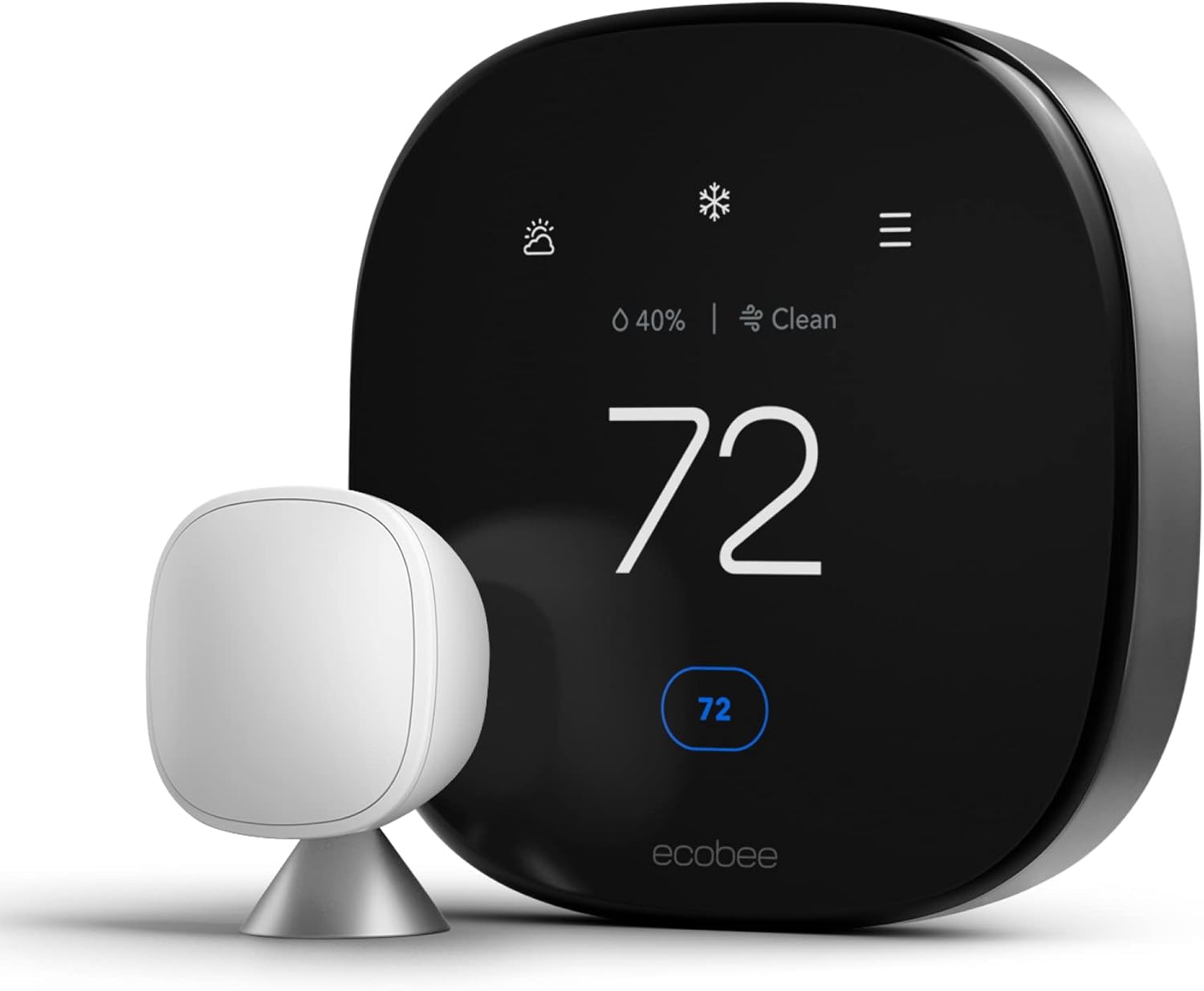
If you want a quick and easy way to control your home’s heating and cooling system and your own comfort, then the Ecobee Smart Thermostat Premium should be your first choice. This energy star certified beast of a unit can save you up to 26% on titanic energy costs, with elite, money-saving performance right where you need it most.
Featuring SmartSensor technology, this home smart thermostat can make you feel warmer or cooler wherever you are, saving energy and money on your energy bill. You’ll also get alerts that provide the alert you need to take action on air quality, plus reminders to replace your furnace filter so you can breathe healthier air.
The Ecobee Smart Thermostat Premium differs in that it uses luxury materials and has a more sophisticated design elements with a large, high-contrast display and superior room occupancy sensing technology. It serves as an all-in-one home monitoring central, providing in-built smoke alarm sensing and security alerts that update you during emergencies like sudden temperature drops that could damage your home.
And with the built-in smart speaker you can control your smart home or play music while you cook using Siri and Alexa. You can even listen to your favorite Spotify playlists or podcasts right through the thermostat. Just plug Siri in with your Apple home hub to use it. With Ecobee SmartThermostat with voice control, you’ll seem like you have a clone.
2. Google Nest Learning Thermostat – Best Self-Learning AI Smart Thermostat

When you want a more intelligent way to control your home’s temperature, the Google Nest Learning Thermostat is a perfect choice. Your living room has never looked so good.Leading the way with such innovations is Tony Fadell, who rocked our digital worlds when he launched the iPod.Inspired by contemporary design, the NEST Learning Thermostat™ is a perfect blend of form and function.
Once you link this to your Wi-Fi, controlling the temperature in your home is as simple as turning the dial. No more programming — the Nest learns your daily habits over the first week, and adjusts itself accordingly to keep you comfortable without any manual programming. Of course, manual changes are available at your fingers, but if the Nest has your heat controlled, life really gets a little bit easier.
Does rising energy costs worry you? The Nest comes with intelligent sensors that learn your patterns, so you don’t have to waste energy when you’re away. It works seamlessly with Alexa and Google Assistant, bringing control to the tips of your fingers and sending you reminders for heating and cooling to change your HVAC filters to keep up the efficiency.
Although the up front cost may be higher than a traditional thermostat, many utility companies offer rebates to make it easier to afford. The setup is generally simple but if you lack a common wire, you might want to consult a professional. Nest Learning Thermostat lets you control the temperature of your home from anywhere.
3. ecobee3 Lite Smart – Best Smart Thermostat for Beginners

If you have a smart home, it can easily turbocharge automation with the Ecobee 3 Lite. Don’t ever yell at your tattered old thermostat for weather updates again – with the Ecobee 3 Lite, the controls of your curated climate experience are literally at your fingertips, leaving you to enjoy the rest of the world with one less thing to worry about: your comfort.
The Ecobee 3 Lite is easy to install, which is good news for people looking to get more out of their home automation without a headache. A unique feature of the AC from Frigidaire is “AC Overcool to Dehumidify” which features cooling that also effectively lowers indoor humidity. This combined feature will help you enjoy a refreshing living area in hot summer while saving some big on your utility bill.
You might be worried that it won’t work with what you’ve already got. Luckily, the Ecobee 3 Lite integrates seamlessly with most of the top smart home platforms, so it should slide right into whatever you’re currently using with minimal complications. If you’re interested in managing temperatures in multiple rooms, you can also double down on room sensors, which are sold separately.
Sleek in design, and with an orbital 3.5-inch touchscreen, Ecobee 3 Lite offers the right combination of style and advanced Wi-Fi technology to fit modern life. Embrace smart living and go home never feeling like the thermostat is using loud or ineffective, making the home a little more comforting and familiar. Your home’s climate is now in the palm of your hand, literally.And you can have the peace of mind that you have control of the home, even when you’re not there.
4. Google Nest Thermostat– Best Smart Thermostat for Home

If you’ve been looking for a smart thermostat that not only looks good but knows how to function, you may want to consider the Nest Thermostat. This thermostat not only help you to save money on your energy bill, but it also help to make your home the optimal comfort zone all day long.
You can even change the temperature when you are gone or on the go and can also easily switch between heating, cooling, and eco modes. You’re able to personalize a location by programming a schedule based on your everyday life, so your house will be warm when you want it. It may not have the Nest Learning Thermostat’s advanced learning features, but you can still change settings remotely using the Google Home app or voice commands via Google Assistant or Amazon Alexa.
You’ll love the easy-to-use layout with a responsive touch sensor that lets you change the temperature with a simple slide of your finger or quick tap for the functions you use most. While there may be a learning curve, you’ll easily pick it up.
The Nest Thermostat is an energy-saving feature of the Nest Learning Thermostat and Nest app. The information displayed on the home screen makes it easy to keep track of your home’s temperature and energy consumption. Installation is simple and can be flexible, whether you want to wire it in with a c-wire, use AA batteries or a power adapter. In sum, the Nest Thermostat is a dependable, well-designed and affordable tool for keeping your house warm and cool with the utmost of simplicity.
5. Amazon Smart Thermostat – Best Budget Smart Thermostat
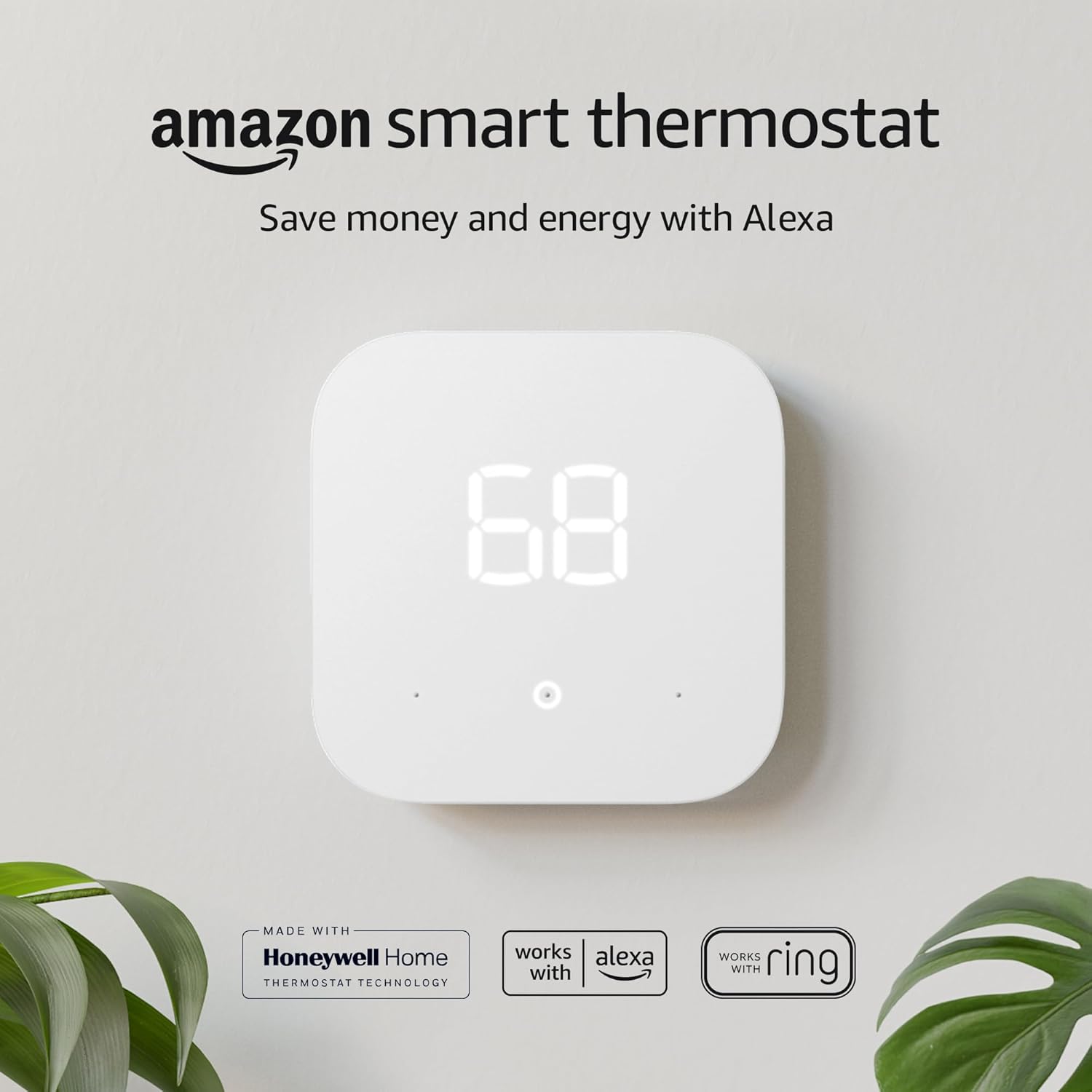
If you need a no-brainer solution for controlling your home’s temperature by the smart way and saving in the same time energy, then the Amazon Smart Thermostat is your perfect choice! This Grypmat Heat Resistant Tool Mat enables easy temperature regulation and encourages a more environmentally friendly way of living.
You’ll be able to support Temperature sensors in your home in the U.S. by using compatible echo devices, including Echo Dot (4th and 5th Gen), echo (4th generation) and Echo Display 10 to help create a comfortable environment in your home. This allows you to control those hot or cold spots in your home, so you can enjoy a more consistent room temperature that meets your personal preference.
You would also presumably benefit from potential cost savings. Once you purchase the thermostat, Amazon will send you an email with details on any applicable rebates being offered by energy companies in your area—so you can save even more cash.
Pair with Alexa to use voice commands to set home or away mode and sleep, it will automatically adjust to your preferences. If you’re at home or on the go, changing the temperature is simple using the Alexa app.
Installation is made simple with in-app instructions, as well as customer support in place. Intelligent, affordable energy The Amazon Smart Thermostat is backed by the advanced Honeywell Home Thermostat technology you trust, and is a smart home investment for someone who wants total control of their home’s comfort and energy consumption.
Things to Consider Before Buying a Smart Thermostat:
Just weigh compatibility with your HVAC system, wiring and installation needs, energy-saving features, smart-home and voice integration, app usability, privacy and data policies, warranty and support, and long-term costs; you should also check earned rebates and user reviews to ensure the thermostat delivers the comfort, control, and savings you expect.
Essential Functions: Heating, Cooling, and Everything In Between
Your thermostat must support your HVAC type—single-stage, multi-stage, heat pump, or boiler—and handle accessories like humidifiers, dehumidifiers, and whole-home fans. Check for C‑wire requirements or models with power adapters, fan and auxiliary heating control, and compatibility with remote temperature sensors. Scheduling flexibility, hold/override options, and basic energy reporting let you tune comfort versus cost; expect typical energy savings in the 10–15% range when paired with sensible scheduling.
Advanced Capabilities: Learning Algorithms and Zoning Options
Learning thermostats use occupancy, humidity, and daily patterns to auto-adjust setpoints, while geofencing ties temperature to your phone location. Zoning integrates motorized dampers or smart vents to control temperatures by room, reducing conflicts between living and sleeping areas. Pay attention to third‑party integrations and whether the thermostat supports multi‑sensor averaging versus single‑sensor control for more balanced comfort.
The Impact of Smart Thermostats on Utility Bills
Adaptive scheduling, geofencing and remote control reduce runtime and peak usage, translating to measurable bill cuts: many users see 8–15% lower heating bills and 10–12% off cooling, with larger gains in extreme climates. Time-of-use rate plans amplify benefits—shifting cooling away from peak hours can cut costs by 20–40% on that portion of your bill—so pairing a smart thermostat with a TOU plan often shortens payback significantly.
HVAC System Requirements: Is Your Setup Ready?
Check the control voltage: most smart thermostats require a 24VAC common (C) wire for power, so two-wire heating-only, millivolt, or 120/240V line-voltage systems may need an adapter or relay. Confirm support for heat pumps, 2‑ or 3‑stage heating/cooling, and zoned systems—manufacturers like Ecobee and Nest provide online compatibility tools that detect stage counts and heat‑pump configurations. Plan for a professional installer if you have a boiler, radiant, or unconventional HVAC setup.
Smart Home Ecosystems: Compatibility with other Devices
Match the thermostat to your ecosystem: Google Nest integrates natively with Google Assistant and offers Alexa skills, Ecobee commonly supports Alexa and Apple HomeKit, and Honeywell models vary by SKU. Look for Matter certification to simplify cross‑platform control across Apple, Google, and Amazon without bridge hacks. Verify local API or Home Assistant support if you run DIY smart home hubs to avoid vendor lock‑in.
Automations and sensor use differ by platform: you can use room sensors to trigger staging in 2‑stage systems, employ geofencing to pause HVAC when your phone leaves a 500–1,000 meter radius, or tie thermostats into scenes that sync with lights and blinds. Expect lower latency and offline control with HomeKit/local APIs versus cloud‑dependent routines, and check firmware update cadence plus privacy policies—Ecobee publishes security docs, while Nest emphasizes encrypted cloud connectivity.
Customer Support: Evaluating Warranty and Help Resources
Look for manufacturers that provide 24/7 chat, phone support, extensive knowledge bases, video walkthroughs, and active community forums. Verify whether replacements are expedited under warranty and whether firmware updates are frequent to address bugs and add features.
Dig into support quality by testing response times and escalation paths: open a chat or ticket and note average reply times, ask if remote diagnostics or serial-number-based troubleshooting are available, and confirm replacement shipping speeds. Consider paid extended protection plans or retailer warranty add-ons for high-end units, and review whether third-party installers are authorized for warranty work to avoid denied claims.
Evaluating Brands: Reliability and Reputation in the Market
Scan warranty length, firmware update cadence, and service reputation; brands like Google Nest and ecobee score highly for feature sets and energy reporting, Honeywell and Emerson Sensi often earn praise for compatibility and straightforward installs. You should weigh documented failure rates, availability of customer support, and whether the company issues security patches regularly before committing to a purchase.
When vetting vendors, you should examine independent test results and aggregated user reviews—aim for average ratings above four stars and low return percentages. Verify long-term software support (brands that push updates for 4–6 years reduce obsolescence), check for open APIs if you want third-party integrations, and review privacy policies; for example, ecobee’s remote sensors improve zonal comfort while Nest’s learning features rely on cloud processing tied to Google accounts, which influences data handling and ecosystem choices.
Conclusion
As a reminder, before buying a smart thermostat you should verify compatibility with your HVAC system and wiring, assess the features and app ecosystem you’ll use, weigh upfront cost against long-term energy savings, evaluate installation complexity or professional needs, and review privacy and data policies to ensure the device fits your comfort, budget, and security expectations.
Leave a Reply