
Finding the best air conditioners shouldn’t be a stressful chore during a record-breaking heatwave. If you are tired of sweating through sleepless nights, you deserve a refreshing, ice-cold retreat that provides instant relief. We compared top models for energy efficiency and cooling power to help you save money while staying comfortable. From smart features to quiet use, these picks will transform your living space. Let’s look at the top choices for your home.
Contents
- Top 7 Air Conditioners:
- 7: Midea 5,000 BTU EasyCool Window Air Conditioner
- 6: SereneLife 8,000 BTU Portable Air Conditioner 3-in-1
- 5: Frigidaire 6,000 BTU Window Air Conditioner with Remote
- 4: ZAFRO 16,000 BTU Smart Inverter Portable Air Conditioner
- 3: Whynter ARC-1230WN NEX Inverter Dual-Hose Portable Air Conditioner
- 2: LG 14,000 BTU DUAL Inverter Smart Window Air Conditioner
- 1: Midea 12,000 BTU U-Shape Smart Inverter Window Air Conditioner (Updated)
- Things to Consider Before Buying a Air Conditioners:
- Portable and Window-Mounted Cooling Units
- Calculating Cooling Capacity and BTU Requirements
- Energy Efficiency Ratings and SEER Standards
- Performance Reliability versus Upfront Investment
- Installation Complexity and Spatial Requirements
- Strategic Thermostat Placement and Programming
- Routine Maintenance Schedules for Peak Performance
- Noise Level Decibel Ratings and User Comfort
- Warranty Terms and Professional Installation Requirements
- Final Words
Top 7 Air Conditioners:
7: Midea 5,000 BTU EasyCool Window Air Conditioner
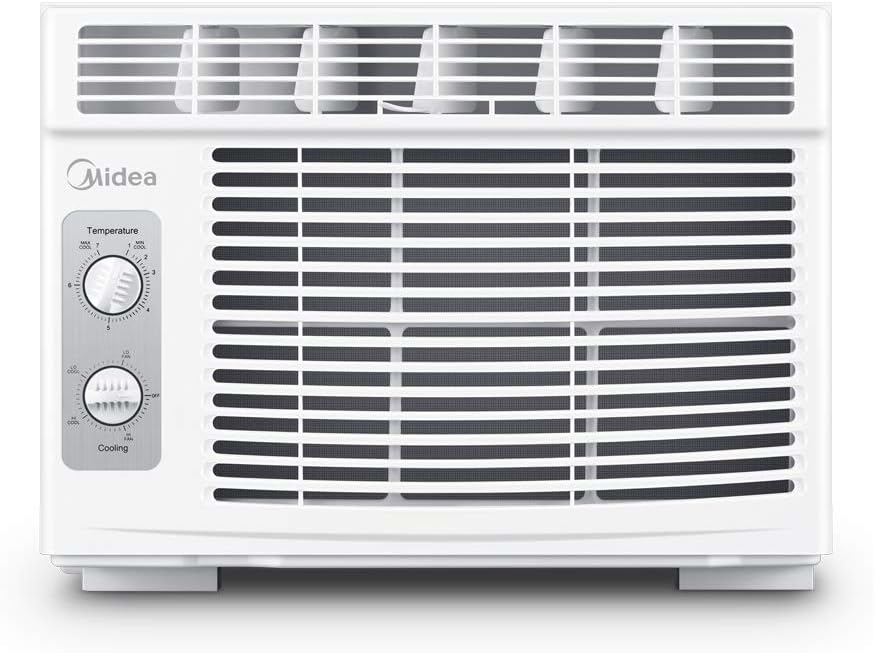
The most effective and reasonably priced window air conditioner for a single bedroom is the Midea 5K EasyCool.The only thing your ceiling fan does is circulate hot air, not cool it. In fact, the temperature is lowered by the EasyCool.First, a separate cooling system with 5,000 BTUs. Rooms as large as 150 square feet are covered.Up next: a reusable filter and mechanical controls. Two controls, no app, no configuration. Dust off and put back in place.
Lastly, an efficiency rating of 11.0 from CEER. Keeps your electricity cost from skyrocketing in the middle of the night—surprisingly affordable.Downsides: two fan speeds, no Wi-Fi, and no remote control. A living room is too big for the 150 square foot limit.Ideal for: tight-wad shoppers, people living in dorms, and those renting a single bedroom. You can’t use it to cool more than one room at a time.
6: SereneLife 8,000 BTU Portable Air Conditioner 3-in-1

If you are a renter and are unable to install a window unit, the SereneLife 8K Portable is the ideal affordable option.Not all apartment buildings explicitly prohibit window-mounted air conditioners. There is no practical way for you to calm down now.You can take the SereneLife with you wherever you go.First, a three-in-one design with 8,000 BTU. This fan/dehumidifier can cool an area as large as 350 square feet.The following items are a window exhaust system and caster wheels that can roll. Tomorrow the living room, and tonight the bedroom.
At last: a fully functional remote control and digital touch panel. Manage the temperature, timing, mode, and fan speed from the comfort of your couch.Negative: Compared to dual-hose devices, single-hose designs are inefficient. Keep the exhaust hose exposed. 55 dBA louder than higher-end.Apt for: apartment residents without a mount, renters, and college students. Very noisy bedrooms or expansive living spaces are not ideal.
5: Frigidaire 6,000 BTU Window Air Conditioner with Remote

When looking for a budget window unit that offers actual remote control, go no further than the Frigidaire 6K Window.Changing the temperature on a 5,000 BTU unit requires you to physically move across the room.The Frigidaire 6K takes care of things without going overboard with smart-AC prices.First, a 6,000 BTU system that covers 250 square feet. A bedroom or small living room might really benefit from a budget of over.
Here we go: a complete remote control with Eco and Sleep modes. Easily adjust settings without leaving your bed. Overnight, Sleep Mode progressively increases the temperature.A 24-hour timer and six-way directed airflow complete the package. Take aim at your seat with the icy blast.Cons: the compressor turns on and off without an inverter and there is no Wi-Fi. 52 decibels more audible than ultra-quiet models.Ideal for: frugal consumers who would rather not pay for an app but still want a remote control. Do not use if you require whisper-quiet sleep or Wi-Fi.
4: ZAFRO 16,000 BTU Smart Inverter Portable Air Conditioner

Renters who despise emptying water tanks will love the ZAFRO 16K Smart Inverter Portable, the top mid-premium model available.Condensate is a normal byproduct of most portable air conditioners. Water seeps through the floor if one day is skipped.The ZAFRO’s self-evaporating technology is the answer to that problem.The first is a 72-hour period of normal humidity without drainage. Hot air carries moisture away, so there’s no need to empty the tank. Includes a drain pipe for use in extremely humid environments.The inverter compressor comes next, operating at 42 dB, which is less audible than a human conversation. CEER is 12.8 whereas the standard is 7.83. The frequency is automatically adjusted by sleep mode.
Lastly, it has a control app, a remote, a 24-hour timer, and six different modes: cool, dry, fan, sleep, extra, and eco. Every corner is impacted by four-way oscillation.Large dual airflow tubes are a drawback. In most bedrooms, 16,000 BTU is too much heat. Full functionality of the app requires setup.Large living rooms and renters in humid areas are the best options. Use not intended in households with small bedrooms or those with window mounts.
3: Whynter ARC-1230WN NEX Inverter Dual-Hose Portable Air Conditioner

For renters in need of serious cooling, the Whynter NEX ARC-1230WN is the way to go.Power bills skyrocket when you use portable air conditioners with just one hose to bring sweltering outdoor air back inside.Thanks to its genuine dual-hose design, the Whynter NEX resolves this issue.To start with, there is a hose-in-hose dual-hose inverter. Having the intake and exhaust systems run independently results in 40% greater efficiency, 20% more cooling, and no heat loss.Now we have the 14,000 BTU system, which covers 600 square feet, has an auto-drain feature that can exhaust up to 87 pints per day, and an integrated dehumidifier.
Lastly: Wi-Fi smart home integration with Google Home and Alexa. Manage the temperature from any location.Downside: at 32 inches tall, it occupies a lot of floor area. Not as lightweight as other portables. More expensive compared to window units that provide equivalent cooling.Homeowners without window mounts or large living areas will benefit the most from this. Avoid if you have a little bedroom or are looking for the most affordable portable option.
2: LG 14,000 BTU DUAL Inverter Smart Window Air Conditioner

An excellent choice for big rooms is the LG 14K DUAL Inverter Smart, a high-capacity window air conditioner.Big living rooms can’t be cooled by an 8,000 BTU device. The room remains heated as it runs continuously without ever catching up.Places where lesser units struggle are no match for the LG 14K.To start, the dual inverter compressor will sleep at a noise level of only 44 dB. No on-off cycling; temperature remains constant. 35% more effective than the initial state.Up next: 14,000 BTU coverage over 800 square feet. Living rooms and dining spaces that are open to one another—all of them are cooled by the same unit.
The last piece is the LG ThinQ smart app, which is compatible with both Google Assistant and Alexa. Remotely control the temperature, establish schedules, and keep an eye on power usage.Drawbacks: Works only with 115 volt outlets and requires a heavy-duty circuit.Utilizing R32 refrigerant signifies the use of more recent service technicians. Window footprint that is larger.Rooms between 600 and 800 square feet, with a large living area, work well. Older window frames and smaller bedrooms are not suitable.
1: Midea 12,000 BTU U-Shape Smart Inverter Window Air Conditioner (Updated)
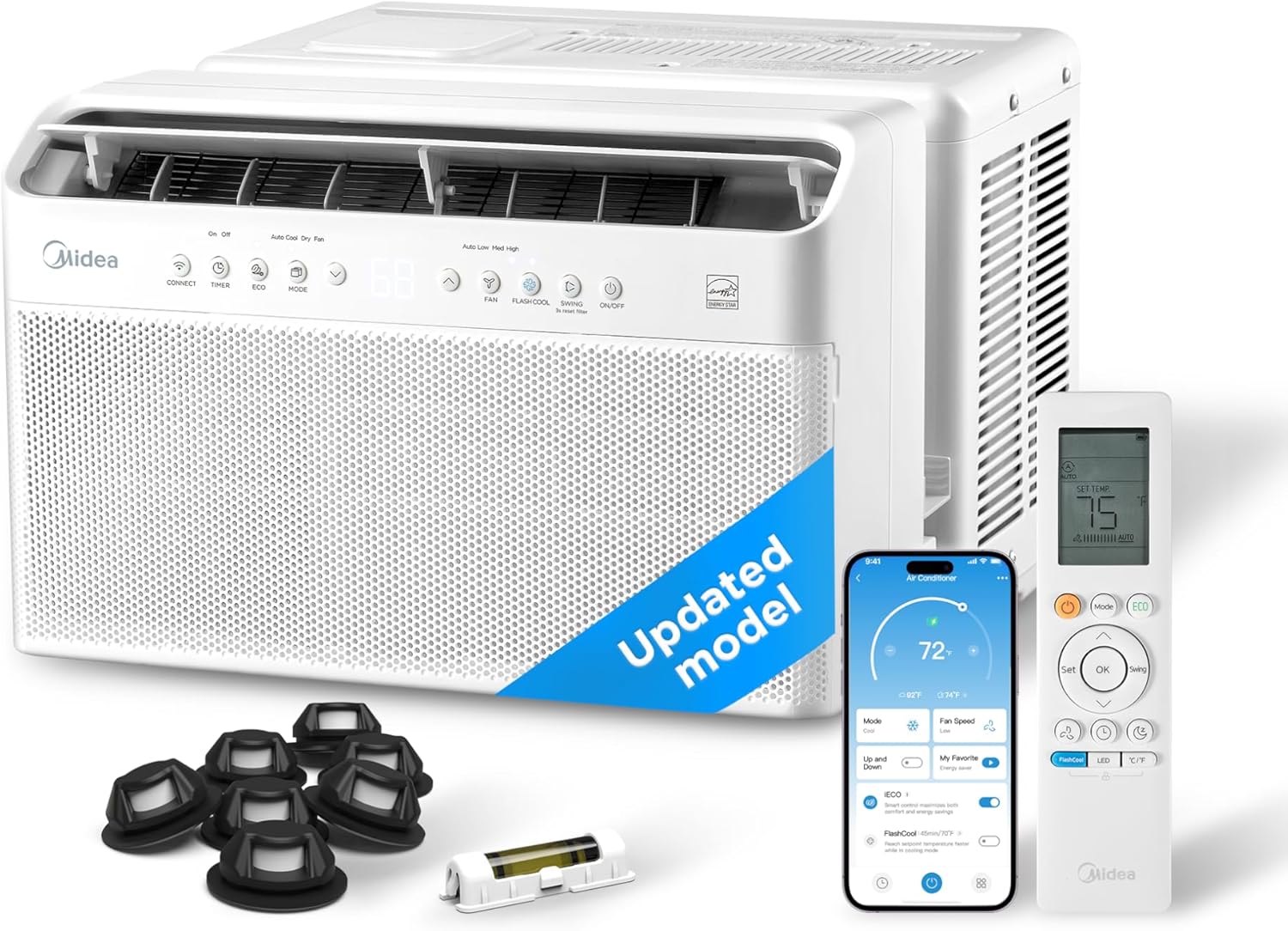
The Midea 12K U-Shape Smart Inverter, designed for those who want nothing less than the best, will be at the top of the list in 2026.Your window is locked every time you use an air conditioner. All summer long, you are confined to a room with no door.That is altered by the Midea U-Shape.To start, no other air conditioner in this area has a U-shape design, so you may leave your window open while it operates. When closed, the anti-theft lock keeps it safe.The second is an inverter compressor, which is ten times quieter than the standard model (32 dBA). No midnight cycling, temperature remains constant.
Thirdly, intelligent Wi-Fi control via Alexa and Google Assistant, together with 35% energy savings and ENERGY STAR certification.The fourth is 550 square feet cooled by 12,000 BTU. Rooms like the bedroom, living room, or apartment with an open floor plan—flagship coverage.Downside: you’ll need double-hung windows that are at least 13.75 inches tall and 22 to 36 inches wide. Bulkier than inexpensive ones.Homeowners seeking flagship performance and air-flow versatility should consider this option. Houses with casement windows or those on a tight budget should not buy this.
Things to Consider Before Buying a Air Conditioners:
Central air conditioning effectively cools entire homes but requires ductwork. Ductless mini-splits offer flexibility with individual control in each space, making them suitable for varying preferences.
Portable and Window-Mounted Cooling Units
Portable and window-mounted units provide cost-effective solutions for targeted cooling in specific areas. These options are especially beneficial for renters or those seeking temporary relief from heat.
Portable units are versatile, allowing you to move them from room to room as needed. Window-mounted units fit snugly in a window and are generally more affordable than central systems, making them excellent choices for smaller spaces. Ease of installation is a significant factor; often, they require minimal tools and can be set up in minutes, providing immediate comfort. The compact design of these units works well in apartments or offices, satisfying quick cooling demands.
Calculating Cooling Capacity and BTU Requirements
Understanding BTUs (British Thermal Units) helps you determine the cooling capacity required for your space. Measure the square footage of the area you want to cool, factoring in ceiling height and sunlight exposure, to select an appropriately sized unit.
Energy Efficiency Ratings and SEER Standards
Examining energy efficiency ratings guides you toward a cost-effective air conditioner. Higher SEER (Seasonal Energy Efficiency Ratio) ratings indicate better efficiency, potentially leading to lower energy bills over time.
Greater energy efficiency not only saves you money but also benefits the environment. Units with a SEER rating of 14 or higher are generally recognized as energy-efficient, reducing your carbon footprint. When comparing models, prioritize those with higher ratings to make a wise investment, ensuring comfort without oversized utility costs.
Performance Reliability versus Upfront Investment
Your choice often hinges on balancing performance reliability and upfront investment costs. Higher-quality models typically offer better long-term reliability but may require a larger initial outlay. Analyzing this trade-off can pave the way for more cost-effective solutions over time.
Installation Complexity and Spatial Requirements
Complex installation can affect both cost and performance. Depending on the model, some units require professional installation and more substantial modifications to your space. Understanding these requirements helps ensure your air conditioner operates efficiently in its designated area.
Different models may have unique installation needs that can impact both your home’s layout and your budget. Wall-mounted units often need more extensive wall support and plumbing for drainage, while portable models demand designated space for optimal airflow. Assessing these factors early will guide you in making a suitable choice that accommodates your living conditions.
Strategic Thermostat Placement and Programming
Position your thermostat away from direct sunlight and heat sources to ensure accurate temperature readings. Programming it to adjust temperatures during off-peak hours optimizes energy usage, creating comfort while minimizing costs.
Routine Maintenance Schedules for Peak Performance
Establishing routine maintenance schedules is necessary for sustaining peak performance in your air conditioning unit. Regular checks can identify potential issues before they escalate, ensuring your system operates efficiently throughout the cooling season.
Consistent maintenance includes tasks like checking refrigerant levels, cleaning coils, and inspecting electrical components. Neglecting these simple procedures can lead to decreased efficiency and increased energy bills. Scheduling bi-annual professional inspections keeps your system in top shape, prolongs its lifespan, and maximizes comfort in your home.
Noise Level Decibel Ratings and User Comfort
Check the decibel ratings of the units you’re considering. Lower noise levels provide a more comfortable environment, especially if you plan to use the air conditioner while sleeping or working.
Warranty Terms and Professional Installation Requirements
Examine the warranty details and installation prerequisites for each model. Comprehensive warranties offer peace of mind, while professional installation ensures correct functionality and efficiency.
Most brands offer varying warranty terms, which can cover parts and labor for specific durations. Understanding these terms is imperative for long-term satisfaction. Some units may require professional installation to validate the warranty or optimize performance, so consider this when budgeting for your purchase.
Final Words
Ultimately, assessing your specific cooling needs, energy efficiency, and budget will guide you in choosing the right air conditioner. Consider the unit’s size, type, and features to ensure optimal performance. Understanding installation and maintenance costs also contributes to making an informed decision, ensuring long-term satisfaction with your purchase.
Leave a Reply