
Finding the most reliable espresso machines in 2026 shouldn’t feel like a stressful gamble with your morning routine. Nothing kills your mood faster than a broken boiler or a watery, disappointing shot when you crave that rich, velvety crema. We’ve tested the best durable coffee makers to ensure long-lasting brewing performance for years to come. Stop wasting money on flimsy gear and discover the heavy-duty machines built to last. Let’s dive in.
Contents
- Top 7 Reliable Espresso Machines in 2026:
- 7: De’Longhi Stilosa
- 6: Breville Bambino Plus BES500BSS
- 5: Gaggia Classic Evo Pro
- 4: Breville Barista Express BES870XL
- 3: Breville Barista Touch BES880BSS
- 2: De’Longhi La Specialista Touch
- 1: De’Longhi Rivelia
- Things to Consider Before Buying a Reliable Espresso Machines in 2026:
- Precision PID Temperature and Pressure Control
- Boiler Materials and Thermal Stability Standards
- Advantages of High-End Home Brewing
- Maintenance Realities and Learning Curves
- Evaluating Build Quality and Component Sourcing
- Identifying Reliable Warranty and Service Networks
- Mobile Connectivity and Remote Pre-Heating Features
- Sustainable Design and Energy Efficiency Ratings
- Final Words
Top 7 Reliable Espresso Machines in 2026:
7: De’Longhi Stilosa
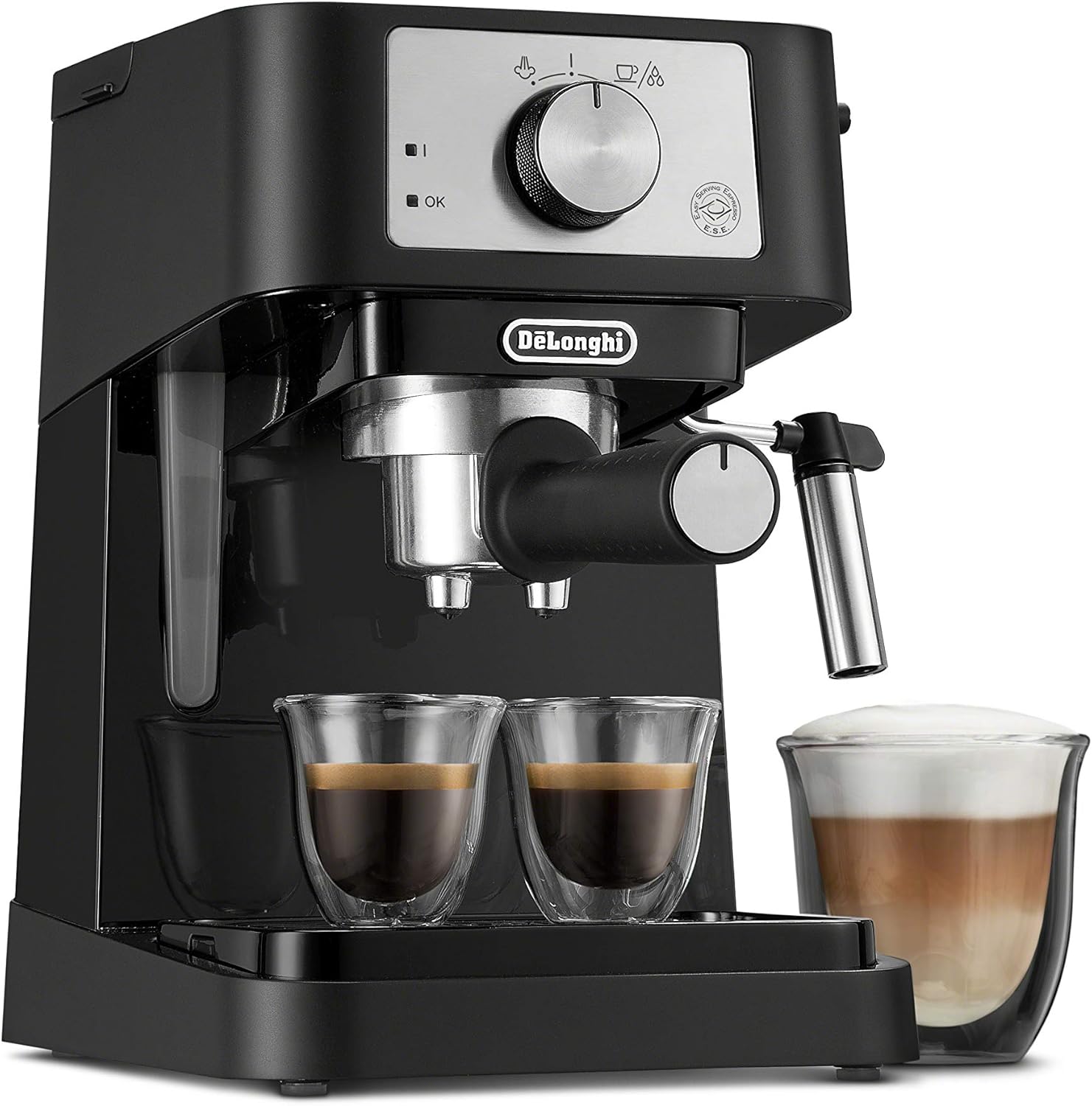
For first-time purchasers who prioritize durability above functionality, the De’Longhi Stilosa is the best budget espresso machine.Circuits fried, plastic warps, and pumps die in a matter of months in inexpensive espresso machines. By removing any fragile components, the Stilosa sidesteps this problem.To begin, a long-lasting boiler made of stainless steel. The identical part that more expensive machines demand a higher price for.Following that, a 15-bar Italian pump that maintains a constant pressure throughout the whole shot. Eliminating clumsy devices from the brewing process.
Last but not least: an analog, fully functional manual steam wand. As long as you change the gasket every two years or so, it will last.Negatives: nothing automatic, no pressure gauge, and no PID. To make milk drinks, a steam wand is essential.Most suited for: people making their first purchase and those who are looking to give a present. Do not use if your home frequently drinks lattes or if you just use one touch.
6: Breville Bambino Plus BES500BSS

The most dependable little espresso machine available—the Breville Bambino Plus.You don’t have the necessary counter area for the big machines. Expired compacts get too hot and explode. With the Bambino Plus, you can accomplish both.The first is a three-second-to-brew-temperature ThermoJet heating system. One reason these last is because there is less thermal stress due to fewer warm-up cycles.A digital PID temperature controller follows, ensuring that each shot’s water is precisely the same temperature.
At long last: a fully automated steam wand that comes with three different milk textures and temperatures. To get flawless microfoam, just set it and go for a while.Drawbacks: limited to single-shot mode, plastic outside panels, and lack of an integrated grinder. The auto wand isn’t up to barista standards.Who it’s best for: people who adore milky drinks and have small kitchens. People who don’t have a grinder or who draw espresso really well should not use this.
5: Gaggia Classic Evo Pro

If you’re looking for an Italian machine that you can fix rather than replace, go no further than the Gaggia Classic Evo Pro.Many manufacturers discontinue producing replacement parts for household espresso machines after the first five years on the market. When something breaks, yours becomes electronic trash. This is not like Gaggia.To start, the housing is built of solid steel in Italy, so it won’t bend or break like plastic ones. Over the past two decades, the chassis has undergone remarkable refinement.The following is a standard café size commercial portafilter, which is 58mm in diameter. There is no shortage of replacement screens and baskets.
Lastly, a commercially available three-way solenoid valve is included to depressurize the puck following each shot. Uses the same component as the 200 beverages pulled everyday by Gaggias commercials.There is no PID stock, therefore you have to use temperature surfing. Steaming milk requires practice. Boiler purists disagree on aluminum.Ideal for: those that plan ahead and modify their homes.Those looking for simplicity and who despise tinkering should not use this.
4: Breville Barista Express BES870XL

If you use espresso machines at home on a regular basis, you need the Breville Barista Express.There would be more clutter on your counter and two more gadgets to break if the machine and grinder are separate. Everything is neatly packaged in the Express, which has been fine-tuned over a decade.As a first feature, this Breville model has a dose-control mechanism and an integrated conical burr grinder, a design that has been successful for many years. Always have replacement burrs on hand.After that, the digital PID temperature control keeps the beer temperature within one degree. The most important factor in this machine’s ability to withstand years of continuous use.
At last, a manual microfoam steam wand—less complicated and less prone to malfunctioning electronics than its automatic counterparts.Lactose-free milk for artistic lattes.Aged ThermoJet units are faster than the ThermoCoil heater. The burr cover made of plastic degrades with time. No control panel.Ideal for: people who make milk drinks on a daily basis and would want a multipurpose machine. Warning: grinder owners and minimalist setups are not for you.
3: Breville Barista Touch BES880BSS

The most dependable one-touch machine for homes with several users per day is the Breville Barista Touch.For baristas, using manual milk wands is a skill that can lead to scorched milk, inconsistent foam, and irritation. The Barista Touch eliminates the element of human error.It all starts with a touchscreen that has drink presets—you, your spouse, and your child can all tap a face to obtain their personalized drink. Next: a self-operating microfoam steam wand that lets you customize the temperature and texture of your milk at 6 in the morning.Get out of there while it’s steaming; it will shut off accidentally.
Last but not least, there’s ThermoJet heating with PID, which allows for a three-second heat-up and maintains the same consistent temperature as the rest of Breville’s machines.Negative: the touchscreen is just another electrical part that could malfunction. The quality of the auto wand isn’t café foam. Immobilized by the milk characteristics of Breville.Great for houses with several users, hectic mornings, and families. People who prefer to manually adjust the amount of milk in their lattes will not like this.
2: De’Longhi La Specialista Touch

If you’re looking for an Italian touchscreen semi-auto that combines precision and dependability, go no further than the De’Longhi La Specialista Touch.The majority of touchscreen devices have software that fails to adequately conceal their complexity. The machines’ intelligence is programmed by La Specialista Touch.The first is a touchscreen that has ten different drink recipes already programmed in.You can choose from espresso, americano, cappuccino, or latte, or you can experiment with different amounts and intensities to make your own.Following that, we have an Italian-made conical burr grinder equipped with Bean Adapt technology. This machine will walk you through the dial-in process once, and then it will lock the recipe to prevent the burrs from being worn down from continuous readjustment.
As a last feature, an automated milk frother is available, which includes five froth settings, four temperature options, and a cold-extraction mode that allows for the delivery of cold brew in less than five minutes.Touchscreen and software introduce new potential points of failure in the long run. That auto wand isn’t fit for a lathe. The footprint of no-grinder semi-autos is smaller than ours.Ideal for: Fans of historical brands seeking Italian engineering with a single touch. Disliked by: customers who value simplicity above all else or who insist on a strictly manual process.
1: De’Longhi Rivelia

The De’Longhi Rivelia is the sole completely automated bean-to-cup machine in this area, designed for owners who would like not to give any thought to coffee.You have to pay attention to every single machine here; you have to tamp, dial, froth, and clean a portafilter. After ten years of doing it twice a day, the math gets really rough.First, you may load beans, choose a beverage, and then walk away; the machine has one-touch grinding, dosing, brewing, and frothing capabilities. Five minutes of labor can be replaced by five seconds of interaction.Second, you can swap out the bean hoppers for different types of beans without having to grind through the old stock first. This way, you can keep both regular and decaf beans in the machine at once.
Thirdly, a hot and cold beverage steamer that automatically foams milk, oat, almond, and soy milks. The same wand for iced lattes and hot cappuccinos.Detrimental: requires substantial time and effort. There are more points of failure when there are more electronics. No control over extraction by the barista.Ideal for: Persons on the go who desire coffee of café quality without the fuss. Those who want a more hands-on approach to espresso may want to look elsewhere.
Things to Consider Before Buying a Reliable Espresso Machines in 2026:
You need to focus on several key factors when choosing an espresso machine for 2026. Understanding the varying features, technologies, and price points will ensure you invest in a model that caters to your coffee preferences and lifestyle.
Precision PID Temperature and Pressure Control
Temperature and pressure stability are non-negotiable for expert brewing. Modern machines often incorporate PID controllers, which ensure consistent heating and optimal extraction. With precise adjustments, your espresso will taste better with each cup.
Boiler Materials and Thermal Stability Standards
Choosing the right boiler material affects thermal stability and brewing efficiency. Copper offers superior heat conductivity, while stainless steel guarantees durability. Opting for machines built with these materials can enhance consistency and longevity in your espresso experience.
Advantages of High-End Home Brewing
Investing in high-end home brewing equipment allows you to replicate café-quality espresso and explore diverse brewing techniques. Elevating your coffee experience, it also fosters a deeper appreciation for flavor nuances and coffee origins, making every cup a personal craft.
Maintenance Realities and Learning Curves
Owning a sophisticated espresso machine requires commitment to upkeep and an adjustment period. Familiarizing yourself with its components and proper cleaning techniques ensures optimal performance, while the learning curve enhances your brewing expertise over time.
Routine cleaning and maintenance are imperative for extending the life of your espresso machine. Delving into the specific requirements will help you avoid common pitfalls, such as scale buildup and inconsistent extraction. Understanding these fundamentals fosters not only a more enjoyable coffee-making experience but also a greater proficiency in crafting your favorite brews.
Evaluating Build Quality and Component Sourcing
Investing in a machine with high build quality means examining materials like stainless steel and brass. Components sourced from reputable manufacturers often indicate better durability. Check for details such as weight and finish, as these reflect a machine’s sturdiness and longevity.
Identifying Reliable Warranty and Service Networks
Warranty terms can reveal a manufacturer’s confidence in their product. Look for extended warranties that cover both parts and labor, ensuring you won’t face unexpected repair costs. Assessing the availability of service centers makes it easier to address issues should they arise.
Identifying Reliable Warranty and Service Networks is crucial to your peace of mind. A comprehensive warranty not only covers manufacturing defects but also includes support for repairs over the years. Investigating local service networks helps secure prompt assistance, preventing extended downtime for your espresso machine. Prioritizing these aspects will save you headaches and expenses in the long run.
Mobile Connectivity and Remote Pre-Heating Features
Mobile connectivity allows you to control your espresso machine from your smartphone. Remote pre-heating features let you start brewing coffee before you even reach your kitchen, ensuring your morning routine is efficient and enjoyable.
Sustainable Design and Energy Efficiency Ratings
Sustainable design focuses on reducing environmental impact. Energy efficiency ratings indicate how well the machine consumes power, helping you select a model that’s both eco-friendly and cost-effective.
Opting for espresso machines with high energy efficiency ratings can significantly lower your electricity usage. Look for models that incorporate eco-friendly materials and energy-saving modes, ensuring that you contribute positively to the environment while enjoying your coffee. A focus on sustainability not only benefits the planet but can also result in lower energy bills over time.
Final Words
With this in mind, assess key factors such as machine type, price, maintenance, and brand reliability before purchasing an espresso machine in 2026. Understanding your specific needs and preferences will guide you to a dependable choice that enhances your coffee experience.
Leave a Reply